
How to Boost Your Immune System for Cold & Flu Season
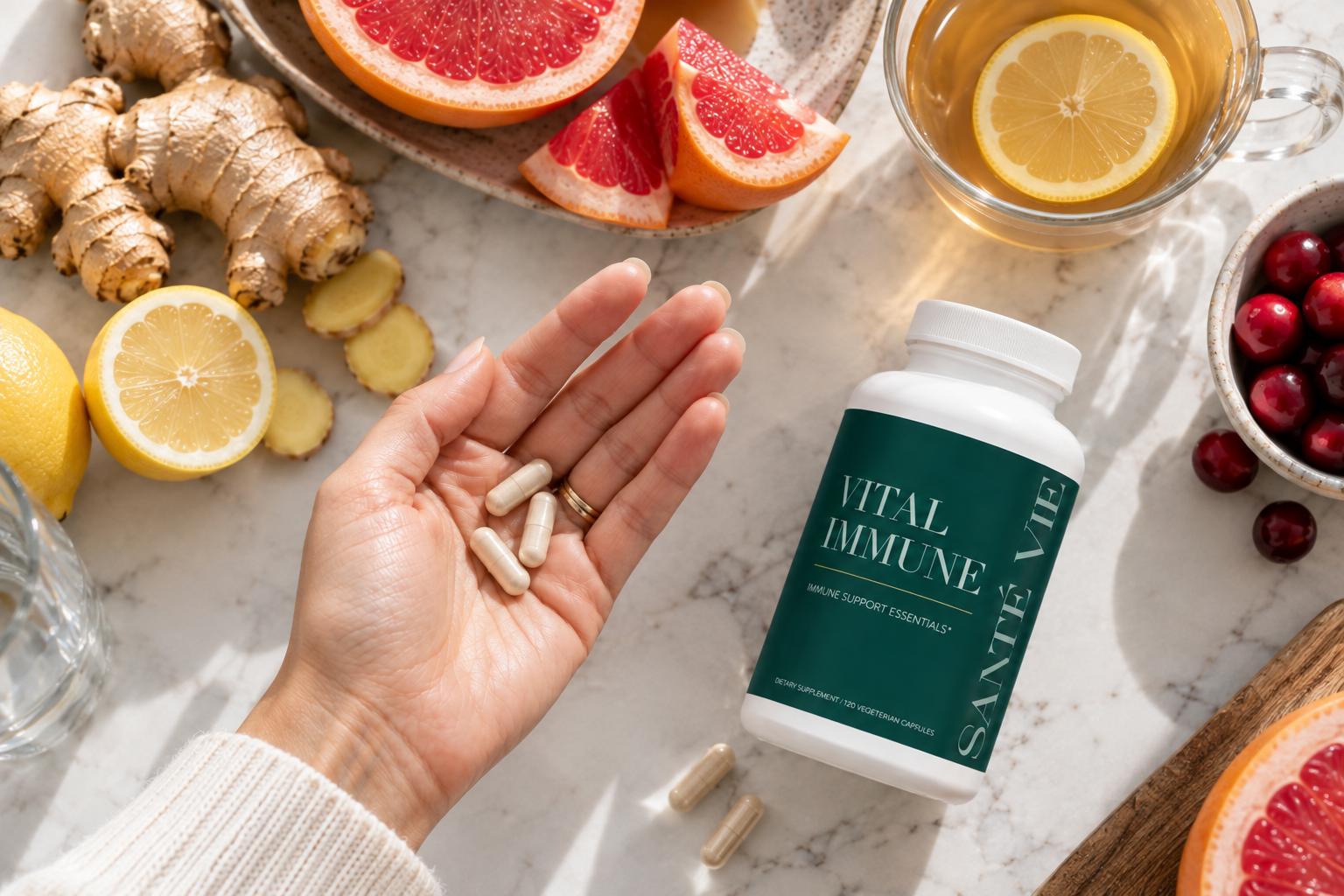
Strategic ways to support your immune system before, during, and after illness.
Every year, cold and flu season seems to trigger the same routine.
Someone at school gets sick. A coworker starts coughing. Your spouse wakes up with a sore throat. Suddenly, you’re loading up on vitamin C, zinc, elderberry, and anything else labeled “immune support.”
There’s nothing inherently wrong with that. There are nutrients and supplements that can be useful when you’ve been exposed to something or when symptoms begin.
But if that’s the first time you’ve thought about your immune system, you’re starting a little late.
Think about it like preparing for a storm. You can absolutely grab buckets once the rain starts coming through the ceiling, and those buckets are useful. But ideally, you’ve spent some time maintaining the roof before the storm arrives.
Your immune system works much the same way.
The goal isn’t to throw everything we have at the body once we get sick. Instead, we want to give the immune system the resources it needs to function well before exposure ever happens…and then know how to offer additional support when sickness does happen.
Build a Strong Foundation for Immune Health
Before we talk about vitamin C, zinc, or other targeted immune support, we need to start with the basics. Nutrition, sleep, and hydration all play an important role in how well your immune system functions, and supplements can only compensate for so much when those foundations aren't in place.
Start with balanced nutrition
There can be a big gap between “I eat pretty healthy” and consistently giving your body the nutrients it needs to function well.
You need to be eating plenty of good foods on a regular basis in order to get the vitamins, minerals, antioxidants, protein, and other nutrients your immune system relies on. That means eating plenty of vegetables (especially the green ones), quality sources of protein, fruits, and healthy fats, while keeping processed foods and added sugars to a minimum.
Prioritize good-quality sleep
Sleep and immune function are closely connected. While you sleep, your body is doing important work involved in recovery, repair, and regulation of the immune system. You’ve probably noticed that when you’re tired and worn out, you’re more susceptible to getting sick.¹
If you’re chronically sleeping poorly, the answer isn’t simply to tell you to “get more sleep.” We want to understand why you aren’t sleeping well and address what may be interfering with it.
Stay well hydrated
You don’t need a sugar-laden sports drink or an electrolyte packet every time you fill your water bottle to stay hydrated. For everyday hydration, good old-fashioned water does a lot of the necessary work.
Make sure you’re drinking consistently throughout the day, and be mindful of how much caffeine and alcohol you’re consuming, since both can affect hydration and sleep.
These foundations give your immune system the resources it needs to do its job well. And because immune function is closely connected to things like gut health, stress, and metabolic health, supporting your overall health is an important part of supporting your immune system, too.
Key Nutrients That Support Your Immune System
Once those foundations are in place, we can get more specific about nutrients we can use more intentionally to support immune function during cold and flu season. There’s absolutely value in increasing certain nutrients through food and supplementation to help support your immunity when you’ve been exposed to an illness or start feeling something coming on.
Here are a few of the most common nutrients we focus on for immune support. It’s not everything that can be helpful, but it’s a good starting place for most people.
Vitamin C
Vitamin C may be the nutrient most synonymous with immune support, and for good reason. It acts as an antioxidant, helping protect cells against oxidative stress, and plays several important roles in normal immune function.²
The important thing is that we don’t want to wait until we’re already sick to start thinking about it. Regularly getting adequate vitamin C gives your body access to this essential nutrient before your immune system is under greater demand.
Food sources: Red and green bell peppers, citrus fruits, kiwi, strawberries, broccoli, Brussels sprouts, and tomatoes are all good sources. And here’s one that surprises people: a half cup of raw red bell pepper contains about as much vitamin C as a typical serving of orange juice.²
Our supplement recommendation: C+ BioFizz
Why we like it: In addition to a generous amount of vitamin C, C+BioFizz contains the bioflavonoids quercetin, hesperidin, and rutin, which provide additional antioxidant and immune support. It also uses buffered forms of vitamin C, making it gentler on the stomach than some high-dose vitamin C supplements.
Zinc
Another commonly known big player in immune function is zinc. Your body needs it for normal development and function of immune cells, and it becomes especially helpful once a cold actually begins. Certain forms of zinc taken early in a cold may help shorten how long symptoms last.³
But while zinc is helpful, this is one of those supplements where more is definitely not always better. Regularly taking too much can interfere with copper absorption, which can create an entirely different set of problems.⁴ Short-term therapeutic use is different from taking high-dose zinc indefinitely.
Food sources: Oysters contain more zinc than any other food, but you don’t have to become an oyster person. Beef, poultry, seafood, pumpkin seeds, dairy products, beans, nuts, and whole grains can all contribute zinc to the diet.
Our supplement recommendation: Vital Immune
Why we like it: Vital Immune provides 20 mg of zinc as part of a broader immune-support formula that also includes vitamins A, C, and D, NAC, and quercetin. This gives you a substantial amount of zinc without needing to add a separate high-dose zinc supplement.
Vitamin D
Vitamin D is an important part of a healthy immune response, helping regulate how our immune cells respond when the body encounters a threat.
Unlike many of the other nutrients on this list, vitamin D can be harder to get consistently, especially during the cold, cloudy winter months when we aren’t exposed to the sun as much. For many people, supplementation can be helpful during that time of year, but because vitamin D is fat-soluble and stored by the body, we generally recommend testing rather than simply taking increasingly high amounts long-term.
Food sources: Fatty fish such as salmon, trout, sardines, tuna, and mackerel are some of the best food sources, with smaller amounts found in egg yolks and certain other foods.
Our supplement recommendation: Vital Immune
Why we like it: Rather than using vitamin D alone for general immune support, Vital Immune pairs it with vitamin A and several other nutrients that support healthy immune function. For ongoing or higher-dose vitamin D supplementation, we generally recommend testing so we can determine what you actually need.
Elderberry
Elderberry is one of our favorite things to keep on hand during cold and flu season because it can be an easy way to add targeted support when something starts making its way through the house.
Unlike vitamins and minerals, elderberry is a botanical. It contains naturally occurring plant compounds, including anthocyanins, that have antioxidant activity, and it has traditionally been used for respiratory illnesses.⁵
Food sources: Elderberries aren’t something we recommend trying to incorporate into your diet like the other foods on this list. Raw or improperly prepared elderberries can make you sick, so this is one we prefer in a properly prepared supplement.
Our supplement recommendation: Gaia Herbs PRO Black Elderberry -or- Gaia Kids Black Elderberry Syrup
Why we like it: Gaia Herbs Black Elderberry PRO provides a concentrated form of organic black elderberry along with acerola fruit in a simple capsule. It’s an easy option to keep on hand during cold and flu season without the added sugars found in many elderberry syrups.
GaiaKids Black Elderberry Syrup is one of our favorite options. It uses organic black elderberries and is lightly sweetened with honey, making it an easy way to add elderberry support for younger family members.
NAC
NAC, short for N-acetylcysteine, is one of our favorite tools because it offers a couple of different benefits during cold and flu season.
NAC helps your body produce glutathione, one of its most powerful antioxidants, which plays an important role in protecting cells and supporting healthy immune function. Instead of giving the body glutathione directly, NAC gives it a key building block it can use to make its own.⁶
NAC can also help thin mucus, which can make it especially helpful when you’re dealing with congestion and that thick, stuck mucus that tends to come along with respiratory illnesses.⁷
Food sources: Unlike the vitamins and minerals above, NAC itself isn’t something you get directly from food. Your body makes cysteine from amino acids supplied through protein-rich foods.
Our supplement recommendation: Vital Immune
Why we like it: Including NAC alongside the vitamins, minerals, and antioxidants already found in Vital Immune gives the formula another layer of support, particularly when congestion and respiratory symptoms are part of the picture.
More Immune Supplements Aren’t Always Better
Individual nutrients can be incredibly helpful for immune support, but that doesn’t mean we want to take every immune-supporting nutrient at once. The goal is to use supplements strategically, based on what your body needs and what you’re already getting through food and other supplements.
For basic seasonal support, a well-formulated immune supplement may be all you need. Once you start adding individual nutrients, higher doses, or multiple formulas, it becomes much easier to unintentionally double up or create imbalances.
Nutrients work together, and the balance between them is important. Zinc, for example, can interfere with copper absorption when taken in high amounts over time. Fat-soluble vitamins like A and D can accumulate in the body. This is why we want to be thoughtful about what we’re adding rather than assuming more immune support is always better.
If you’re not sure what you should be taking, reach out. We can look at what you’re already using, your health history, and what you’re trying to accomplish to help you determine what actually makes sense.
And if you simply want a few of our go-to products to have on hand, we’ve put them together here: Shop Our Cold + Flu Immune Support Collection
What If You Keep Getting Sick?
Having a strong immune system doesn’t mean you’ll never get sick. A better indicator is often how frequently you’re getting sick and how well you’re recovering afterward.
If you find yourself asking “why do I keep getting sick”, or feel like sickness tends to hit you harder, or it takes you a long time to bounce back, that’s when we want to have a bigger conversation.
Your immune function is connected to the rest of your health. When frequent or prolonged patterns are showing up, simply adding another immune supplement isn’t necessarily the answer. We want to understand what may be affecting your immune function and address those underlying factors as part of the bigger picture. Nutrient deficiencies, poor absorption and gut dysfunction, chronic stress, inadequate recovery, inflammation, thyroid function, hormonal health, and metabolic health can all influence how well your body is able to respond.
Support Your Immune System Before You Get Sick
The best immune strategy isn’t something you start the morning you wake up with a sore throat.
Build the foundation first. Eat a nutrient-rich diet, prioritize sleep and hydration, and make sure you’re consistently getting the nutrients your immune system needs. Then keep a few targeted tools on hand for the times when something does start circulating through the house.
And if you’re getting sick more often than you think you should, getting hit particularly hard, or struggling to recover, that’s a good reason to reach out to us. Instead of continuing to add more supplements, we can help you understand what may be contributing to the pattern and build a more personalized approach to supporting your health.
DISCLAIMER: This article is for educational purposes and is not intended to diagnose or treat illness or replace individualized medical advice. Supplement needs and appropriate amounts vary based on age, health history, medications, pregnancy or breastfeeding status, and other factors. Talk with your healthcare practitioner before starting or significantly increasing supplements, particularly for children or if you take medications.
References
Besedovsky, L., Lange, T., & Haack, M. (2019). The sleep-immune crosstalk in health and disease. Physiological Reviews, 99(3), 1325–1380.
National Institutes of Health, Office of Dietary Supplements. (2025). Vitamin C: Fact sheet for health professionals.
National Institutes of Health, Office of Dietary Supplements. (2025). Dietary supplements for immune function and infectious diseases: Fact sheet for health professionals.
National Institutes of Health, Office of Dietary Supplements. (2025). Zinc: Fact sheet for health professionals.
National Center for Complementary and Integrative Health. (2024). Elderberry: Usefulness and safety. NCCIH
Rushworth, G. F., & Megson, I. L. (2014). Existing and potential therapeutic uses for N-acetylcysteine: The need for conversion to intracellular glutathione for antioxidant benefits. Pharmacology & Therapeutics, 141(2), 150–159. PubMed
Rogliani, P., Manzetti, G. M., Gholamalishahi, S., Cazzola, M., & Calzetta, L. (2024). Impact of N-acetylcysteine on mucus hypersecretion in the airways: A systematic review. International Journal of Chronic Obstructive Pulmonary Disease, 19, 2347–2360.